Conference systems
Conference systems are presented at category level in this catalogue: conference audio planned around the room and the table — who speaks, who listens, and how the discussion is run. Conference work is part of the company's stated main-product scope, and its history in conference discussion and control systems goes back to its early product lines.
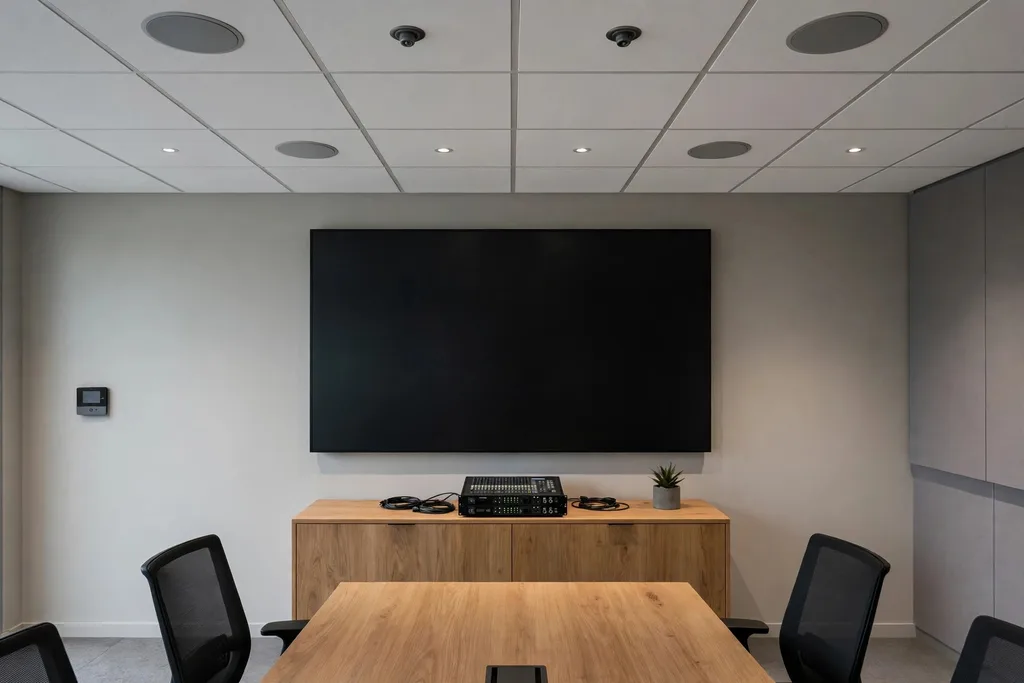
What the conference category covers
A conference installation answers a different question from a public address build. PA asks how sound reaches a space; conference asks how a discussion is conducted inside one — how many seats speak, whether the chair controls the floor, what the room's listeners and any recording or broadcast feed receive. The category covers the audio side of that: the discussion and conference audio equipment specified per room, working with the room's displays and control where a venue runs them together.
Planning from the table outward
The useful starting document is the table itself: how many seats, how many of them speak, how the chair runs the meeting, and what else the room does — presentations, video calls, ceremonies — in the same week. A council chamber, a corporate boardroom and a school meeting room can share a floor area and need entirely different systems, because the discussion pattern differs. Room size matters after the pattern, mostly through the loudspeaker plan: ceiling speakers for even coverage, the matrix for the room's sources, the control host to recall the room's setups.
Conference rooms inside a building-wide order
Conference rooms usually arrive inside a larger list — a headquarters, a school, a government building whose public address, control and conference equipment are ordered together. That is the natural way to buy them: the conference audio is specified against the same rack, network and control plan as the rest of the building. A single-room inquiry is equally workable; it should name the room's other systems so the conference side is not specified in isolation from the displays and control it will live with.
The chairman's controls and the politics of the floor
A conference system's deeper function is procedural: it decides who may speak, in what order, and who may end a contribution. Those decisions are politics rendered in hardware, and they differ by institution — the council chamber's strict precedence, the boardroom's chair-led flow, the panel's managed queue. The specification should therefore begin from the institution's actual procedure, stated plainly: how a delegate requests the floor, how the chair grants and closes it, what happens when two requests compete. Systems configured against a stated procedure feel inevitable in use; systems configured against a generic one feel like an argument with the furniture.
Voting, interpretation and recording attach to the same procedure when they are required, and each must be declared at specification time rather than discovered as an ambition later. A system bought for discussion alone can sometimes grow recording; interpretation, with its channels and booths, must be designed in from the start or not at all. The inquiry that names the institution's full procedural ambitions — including the ones exercised once a year — gets a system that survives those occasions.
Room acoustics: the conference system's silent partner
Discussion systems are asked to make speech intelligible twice over: through the loudspeakers for the room, and through the microphones for recording or remote participants. Both directions are at the mercy of the room — its reverberation, its noise floor, the distance its seating imposes between mouths and microphones. Table layouts that place delegates beyond comfortable microphone reach defeat any electronics, which is why the seating plan is an engineering document for this family. Buyers should send it: the table shape, the seats per side, the positions of chair and public, and the room's surfaces as they are honestly known.
Remote participation has raised the acoustic stakes further. A room that merely satisfies its occupants can still send a muddy, echoing feed to the participants who are not in it, and those participants vote, judge and remember. Where hybrid meetings are routine, the inquiry should say so, and the system's design — microphone coverage, echo behaviour, the feed it presents outward — should be argued against the remote listener's experience as seriously as the room's own.
Delegate units as furniture: wear, wiring and dignity
Delegate units are handled daily by people who did not choose them: pushed aside, leaned on, spoken across, occasionally knocked to the floor. Their industrial design — weight, stability, cable exits that survive chairs, controls findable without looking — decides how the system ages in dignity. Fixed installations can hide their wiring and fix their units; multipurpose rooms that reconfigure must carry the system's cabling as part of the room's changeover labour, a real cost that belongs in the comparison. Buyers for hard-working rooms should weigh robustness and changeover time alongside the electronic specification, and say which rooms reconfigure when they inquire.
Consistency across a fleet of rooms carries the same lesson as elsewhere in this catalogue: identical delegate units and procedures across an institution's meeting rooms mean any official can sit anywhere and already know the system. The saving is not in purchase price but in the thousand small frictions that never happen.
Related pages
Send an inquiry
Describe the room and the discussion pattern at its table, and the conference side can be planned and quoted.