Waterproof column speakers
The waterproof column speaker series takes the column family's long, controlled throw outdoors, into weather. It is the series the company built its outdoor name on, and it covers the placements scenic areas, villages and open public ground ask for most: paths, squares, waterfronts and perimeters.
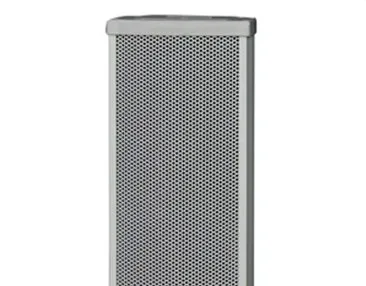
What the waterproof column series is for
Outdoor sound fails in two ways: the weather gets into the equipment, and the sound gets away before it reaches the listener. The series answers both. The enclosures are built for exposed positions — rain, sun and dust are the normal working condition, not an accident — and the column pattern holds its throw over distance in open air, where there are no walls or ceiling to return the sound. A scenic path announcement that is clear at the start of the throw and clear at the end of it is this series doing its job.
Where the series is placed
| Setting | Placement | What the series is doing there |
|---|---|---|
| Scenic paths and waterfronts | Pole-mounted along the route | Carrying guidance and announcements along the walk |
| Squares and gathering ground | Building or pole at the square's edge | Covering an open crowd area from its perimeter |
| Village streets | Poles through the settlement | Village-wide broadcast along the street line |
| Perimeter and yard areas | Structure-mounted, aimed inward | Safety and work announcements across open ground |
Outdoor columns inside a wider system
The series rarely works alone. A scenic area pairs outdoor columns on the paths with garden speakers in the planted areas and category speakers in the buildings; a village build pairs them with the network host that feeds the poles. The inquiry should therefore name the series as part of the site's whole list, not as a standalone count — the amplifiers or network endpoints driving the columns are specified against the same list, and ordering them separately invites a mismatch in the middle.
Weatherproofing as a whole-installation property
A waterproof column is only as weatherproof as its installation. The unit's enclosure keeps weather out of the cabinet; the cable entry, the mounting and the junction where the feed arrives are the installer's contribution, and they are where outdoor failures actually begin. Water tracks along cables, pools in upward-facing entries and freezes in seals that were sound in summer. The specification conversation for outdoor columns should therefore cover the whole chain — unit, entry, mounting orientation, drainage — and buyers in severe climates should say so in the inquiry, because the details that suffice for a sheltered arcade are not the details for an open waterfront.
The same whole-chain thinking applies to the amplifier end of an outdoor run. Long outdoor cable runs meet weather, interference and occasionally excavation; a run designed with its route and protection stated lasts decades, while a run improvised at installation becomes a recurring fault with a seasonal pattern that maddens everyone who inherits it.
Seasonal duty and the off-season
Outdoor systems live seasonal lives. Scenic areas peak in holiday months, sports grounds in their season, waterfronts in summer; the off-season is when maintenance should happen and when neglect quietly accumulates — connectors corroding undisturbed, mounts loosening through a winter of storms, vegetation swallowing a garden-level unit. A buyer planning an outdoor installation should plan its calendar with it: a pre-season walk and test, a post-season inspection, and spares held for the positions the weather reaches first. The equipment conversation and the calendar conversation are, for this family, the same conversation.
Seasonality also affects sizing. A system specified at the season's height must carry peak crowds over peak ambient noise; one specified in the quiet season will be found out in public, at the worst moment. Buyers inquiring out of season should describe the peak, not the day they happen to be standing in.
Salt, sun and the slow enemies
Beyond rain, outdoor loudspeakers face slower enemies: ultraviolet breaking down surfaces, salt air corroding fittings at coasts and around pools, dust and irrigation water in planted ground. Each enemy has its positions — the seafront row, the sun-facing wall, the unit beside the sprinkler line — and a specification that names the positions can answer them individually, with materials and mountings chosen per exposure. A blanket outdoor rating treats all positions alike and therefore answers none of them precisely; the inquiry that maps exposure honestly gets the sharper recommendation.
Appearance ages outdoors too. Finishes that chalk, fade or streak will be judged by the public long before the sound is, in the scenic and civic settings where this family works hardest. The finish conversation belongs in the first inquiry for visible positions, alongside the acoustic one.
Related pages

Send an inquiry
List the outdoor positions and throws, and the waterproof column side of the system can be specified and quoted.