Public address system supplier
Sourcing a public address system from its manufacturer changes what a buyer can ask for: the full catalogue rather than a reseller's selection, models specified against each other inside one range, and OEM or ODM production where the project needs the equipment adapted. This page sets out how supply from the factory side works.
What supplying from the manufacturer includes
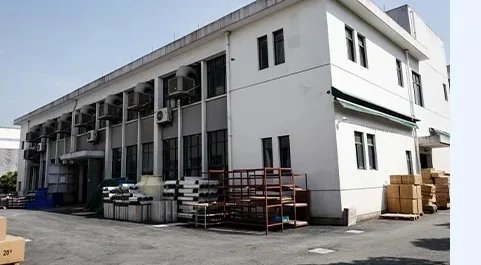
A manufacturer's supply covers three kinds of order. The first is the catalogue order: systems and equipment selected from the published families, quoted against an item list. The second is the system order: the buyer describes a site, and the equipment is sorted into a zoned system list before it is quoted — the same hardware, but specified as a working build rather than as parts. The third is production supply: OEM and ODM arrangements where the equipment is made to the buyer's programme, branding or configuration. Most trade buyers use the first two; the third is there for buyers building a range of their own.
The catalogue behind the supply
The range being supplied is a full-system one: IP network broadcast equipment, intelligent and public-address amplifier series, professional power and karaoke amplifiers, five loudspeaker families, and central control with its matrices. A supplier relationship with a full-system manufacturer simplifies a project buyer's life in a specific way — the parts of a system that must agree with each other (host, amplifiers, endpoints, speakers) come from one specification table, and a question about how two families behave together has one address to go to.
How a supply inquiry is priced
| Inquiry shape | What it contains | What it produces |
|---|---|---|
| Item list | Families or models with quantities and a destination market | A priced quotation against the list as sent |
| Site description | The setting, areas, announcements and distances | A system list drawn up, then priced |
| Programme | A recurring range or volume over time | Production terms discussed against the programme |
Nothing on this site carries a published price, because the same item prices differently inside a single-site order and inside a programme. What the inquiry must always carry is quantities and the destination market; what it should carry, when it can, is the shape of the project behind the order, since a list that will be reordered prices differently from a list that will not.
Markets and the shape of the trade
The manufacturer is China-based and domestically focused, operating its export trade through its verified shop and direct inquiries like the ones this site takes. Export buyers are therefore dealing with the factory's own export desk, not a trading intermediary: the person answering the inquiry sits with the people who make the equipment. Documentation for the destination market is prepared as part of the order paperwork, and compliance certificates are available upon request as part of that process.
Starting the relationship
The first order is usually a list. Buyers who expect to reorder send the list with a note of the programme behind it; buyers testing the range send a smaller list covering the families they most need to judge. Either way, the reply works from what was sent — which is why the item list, with quantities and destination, is worth five minutes of care. The contact page lists exactly what to include.
Trial orders and what they can prove
A trial order is the buyer's instrument for converting claims into observations, and it works best when it is designed as a test rather than merely shrunk as an order. A useful trial exercises the exact failure points the full order depends on: the family whose behaviour is least certain, the configuration in the buyer's own hands, the documentation's clarity to a reader who was not at the negotiation. Quantities chosen for price alone test nothing but the price. Buyers should state the trial's purpose in the inquiry — which questions it must answer — because a supplier who knows the questions can pack the answers: the right samples, the relevant configuration notes, the named contact for the awkward findings.
The trial's findings should be written down by both sides before the main order is discussed. Memory edits results in the direction of politeness; a short shared record of what was tested and what it showed protects the main order from inheriting the trial's unresolved questions as silent assumptions.
After the order: the relationship's working parts
Supply relationships fail in the small print of ordinary weeks: the configuration question answered by nobody because it sat between two desks, the delivery change communicated to the wrong address, the document that existed in one language only. The working parts that prevent this are unglamorous — a named contact on each side, an agreed channel for technical questions, versioned documents rather than attachments named finally. Buyers establishing a new supplier should settle those parts in the same exchange as the first order, while goodwill is abundant, rather than after the first friction has spent some of it.
That settlement should include how problems will be raised. A supplier who hears about a difficulty early can usually solve it cheaply; one who hears about it after it has compounded receives a grievance instead of a question. The buyer's side of the bargain is promptness and precision in reporting — the zone, the unit, the behaviour, the conditions — and this site's contact route is built to carry exactly that shape of message.
Related pages

Send an inquiry
Send the item list or the site description, and the supply side can be quoted from the factory desk.